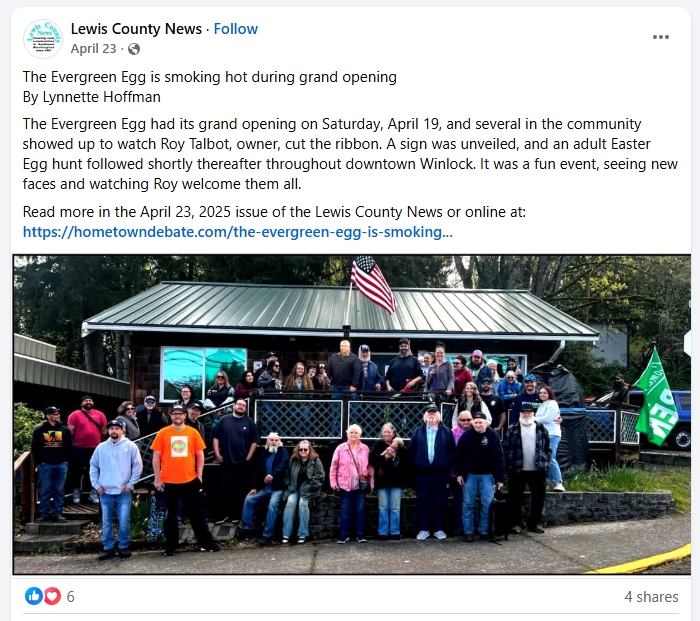









First Brewpub Post-Prohibition: Yakima Brewing & Malting Co. opened in 1982, marking the beginning of craft beer culture in the U.S..
First Floating Bridge: The Lacey V. Murrow Bridge, built in 1940, is the first floating concrete bridge in the world.
First Female Mayor of a Major American City: Bertha Landes served as the first female mayor of Seattle from 1926 to 1928.
First Red Robin Restaurant: The first location opened in 1969 near the University of Washington.
The first case of mad cow disease (Bovine Spongiform Encephalopathy) was discovered in Washington state on December 23, 2003, in a Holstein cow from a dairy herd in Mabton.
- First in Covid The state of Washington
- The first confirmed case of COVID-19 in the United States was reported in Washington state on January 21, 2020.
- This case was documented in Snohomish County
First Diagnosed Case: The first case of COVID-19 in the U.S. was reported in Washington State.
First Deaths: Washington reported its first deaths in the U.S. linked to a long-term care facility.Autonomous Zone:Seattle became the first autonomous zone in the U.S. after the death of George Floyd.
It doesn’t stop there…
Our city has been lying for years and no one seems to have noticed…
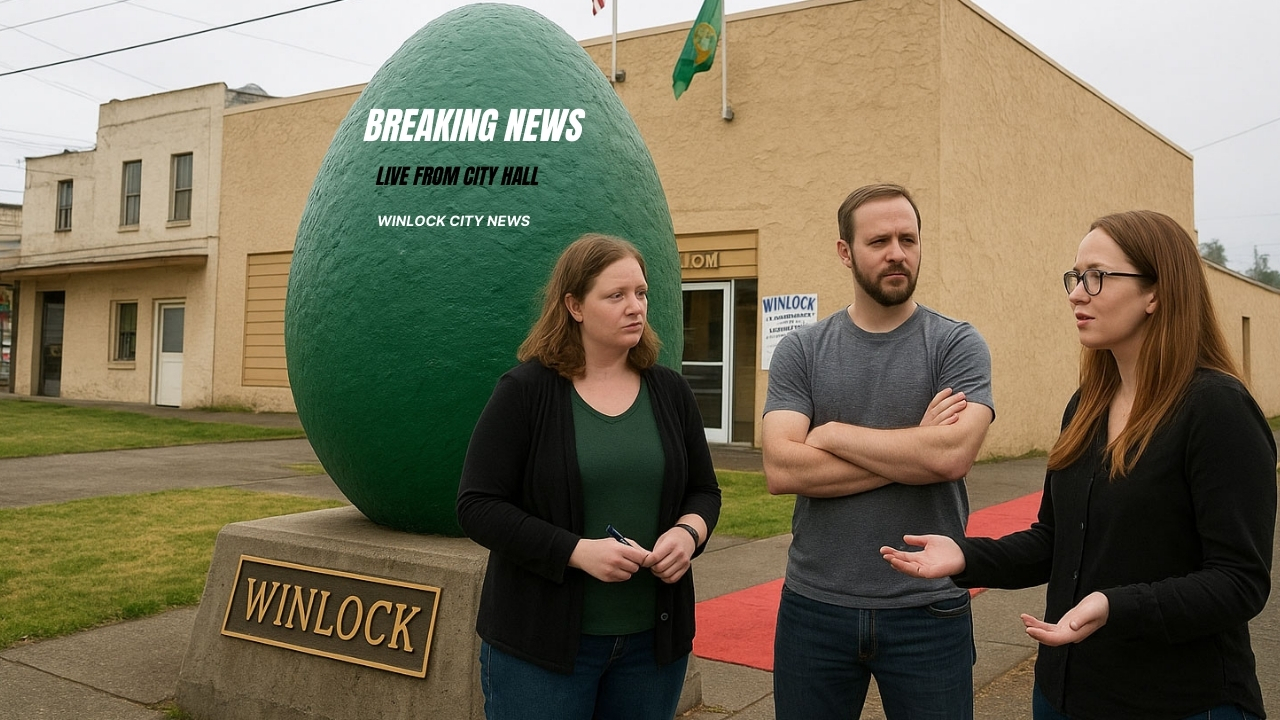
“Winlock City Does NOT Have The World’s Largest Egg”
Breaking apart families is what Washington State is known for.
Downtown in the city of Winlock will get its very first Drug dealer on main street…

Everyone talking about the New Green Egg
Meanwhile people are being controlled by substances nationwide...
What Really Happens When Someone Quits Weed After Years of Daily Use
Emotional and Mental Health Improvements
One of the most surprising changes: the improvement in mental health after several months without cannabis
Washington state considers supplying drugs directly to addicts in ‘safe supply’ initiative
Washington is “going in absolutely the wrong direction.”
What to know about the deadly cannabis hyperemesis syndrome
Something stinks in Washington State… This time its not a rotten egg….
Washington State is creating more drug addicted residents daily….
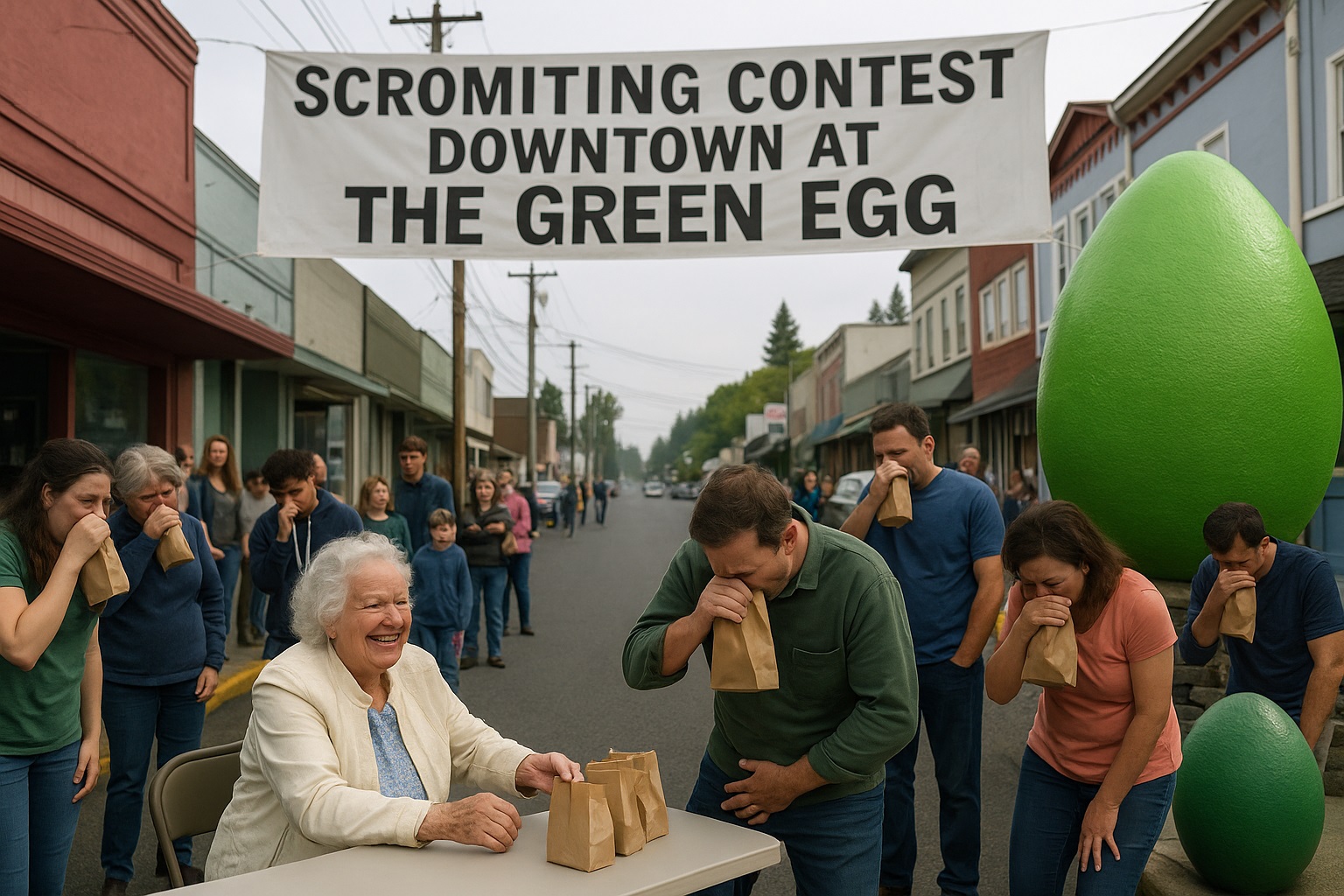
Scromiting” is a grim slang term for the severe nausea and vomiting that can come with cannabinoid hyperemesis syndrome (CHS), a complication linked to long-term heavy cannabis use. As ER clinicians report seeing more cases, the condition is forcing a fresh look at the gap between marijuana’s “harmless” reputation and its real-world risks.
As part of the solution to addressing the ongoing opioid epidemic, a Washington Health Care Authority work group has released recommendations that include turning the state into a drug supplier of sorts as part of a plan to provide safer drugs to addicts.
It was a pain worse than childbirth, said a TikTok mom as she described bouts of uncontrollable vomiting after marijuana use.
“I was crying and screaming and I was like ‘I can’t take this anymore!’ I hate my life,” she said. “I’m just begging God, like please make it stop!”
Dubbed “scromiting” by social media due to the combination of screaming and loud vomiting, the medical name for the condition is cannabis hyperemesis syndrome, or CHS, which is on the rise in the United States. Habitual users of cannabis, including teenagers, are showing up in emergency rooms complaining of severe intestinal distress.
“It is medically safer to take regulated and prescribed opioids such as hydrocodone or oxycodone under a doctor’s supervision than unregulated high dose THC products with various contaminants and adulterants.”
“They are writhing, holding their stomach, complaining of really bad abdominal pain and nausea,” said Dr. Sam Wang, a pediatric emergency medicine specialist and toxicologist at Children’s Hospital Colorado, who treats adolescents with the condition.
“They vomit and then just continue to vomit whatever they have in their stomach, which can go on for hours,” Wang told CNN in a prior interview. “They often say they took a scalding hot shower before they came to the ER but it didn’t help.”
Immediate treatment consists of anti-nausea medications and IV fluids to combat dehydration from the vomiting. But patients also undergo a battery of tests to rule out other causes: blood and urine tests, expensive CT scans, unpleasant upper GI endoscopy and gastric emptying tests, to name a few.
Washington having the highest drug-related deaths was about a recently released report from the Department of Children, Youth & Families that found 27 children under state supervision died or suffered a near-fatal incident in the first three months of 2025. More than half of those were fentanyl related.
Lev’s point wasn’t that opioids are safe in some broad, blank-check way. It was that regulation, dosing, and quality control matter, and some of today’s high-potency cannabis products don’t always come with those guardrails.
During that same conversation, she used a word I hadn’t heard before: “scromiting.” It’s slang—screaming plus vomiting—and it’s often used to describe the worst episodes of cannabinoid hyperemesis syndrome (CHS): cycles of relentless nausea and vomiting that can be so painful and exhausting that some people wind up in the ER.
Lev put it bluntly: just about every emergency department in America now treats cannabis-related illness every day. Whatever you think about legalization, that reality clashes with marijuana’s reputation as a “safe” and “natural” drug that can’t seriously hurt you.
What CHS is (and why it’s so weird)
The medical condition has been described in the literature since 2004, when clinicians reported a pattern of cyclical vomiting linked to chronic cannabis use. (The term “scromiting” was popularized on TikTok.) The irony here is obvious: cannabis is often used as an anti-nausea treatment, especially for chemotherapy patients, yet in some long-term heavy users, it can flip, producing the opposite effect.
The rule of thumb: if you’re trying to decide whether this is something you ever want to experience, you probably want to veto anything that includes the word hyperemesis.
Why “scromiting” is back in the news
Clinicians who treat these cases describe a gruesome pattern that’s hard to mistake. Sam Wang, M.D., a pediatric emergency medicine specialist and toxicologist at Children’s Hospital Colorado, told CNN:
“They vomit and then just continue to vomit whatever they have in their stomach, which can go on for hours… For some of our kids, this is their fifth ER visit in the past two months, with symptoms that they can’t control.”
In severe episodes, people can’t keep fluids down, can’t stop retching, and may need emergency care for dehydration and symptom control.
How does it feel?
Terrible. Some of the most vivid descriptions come from people who’ve been through it. A recent People Magazine report quoted CHS sufferers describing the experience in language that’s hard to forget:
“It is horrifying. It is the scariest thing I’ve ever gone through in my entire life.”
“You don’t wanna be that person going to the ER multiple times a week…”
“The only way I can describe it is a living hell.”
“My body was giving up on me.”
You don’t need any more to get the point: for the people who experience CHS at its worst, it can be disabling, frightening, and repetitive—something that drags them back to the ER again and again.
Is CHS actually increasing?
A reasonable skeptic will ask the obvious question: Is this syndrome really becoming more common, or are doctors just better at recognizing and coding it than they were a few years ago?
The answer is likely some of both. Awareness, diagnostic habits, and reporting criteria can absolutely move numbers. But there’s also evidence of a real upward trend in ER encounters.
A paper in JAMA Network Open reports a sharp rise in CHS-related emergency-department encounters among adolescents and young adults over the past several years, and it breaks the pattern out by policy environment. In the figure below, the authors compare state-years where recreational (adult-use) cannabis was legal and dispensaries were open with state-years where recreational cannabis wasn’t legal. The “recreational-legal” line runs higher, and both groups climb steeply starting around 2020—suggesting this isn’t confined to one type of state.
Just because the state allows it doesn’t mean it should be allowed to open in a small town like this.

Figure 1: Yearly ER visit rates for cannabinoid hyperemesis syndrome (CHS), comparing states/years where recreational (adult-use) cannabis was legal and dispensaries were open versus states/years where recreational cannabis wasn’t legal. From 2017–2023, CHS visit rates are higher in the recreational-legal group, and both groups rise sharply starting around 2020. Error bars show uncertainty around the estimates.
At the same time, the figure alone can’t tell you why the increase is happening. Possible contributors include higher use rates, higher potency products, different consumption methods, and better recognition in clinical settings. Trend data can show direction; pinning down causation takes more work.
Not just an American issue
CHS itself isn’t “made in the USA.” Clinicians outside the United States report it too, and the syndrome is discussed in international medical literature. It is a clinical phenomenon that shows up wherever heavy cannabis use shows up, something recently reported by
the World Health Organization.

Is this the future of Winlock?
The city just crowned an old lady as Queen Mayor, with her daughter joining the city council. This likely means more parades, increased drug use, and more business for her, but none for the city. She has no plans to promote the Winlock Industrial Park at I-5, dubbed
“The largest shovel-ready industrial park in the entire Northwest.”
“Welcome to New Winlock home to the Angry Karens”